
Direct inquiries
How a tourism website can earn more direct inquiries
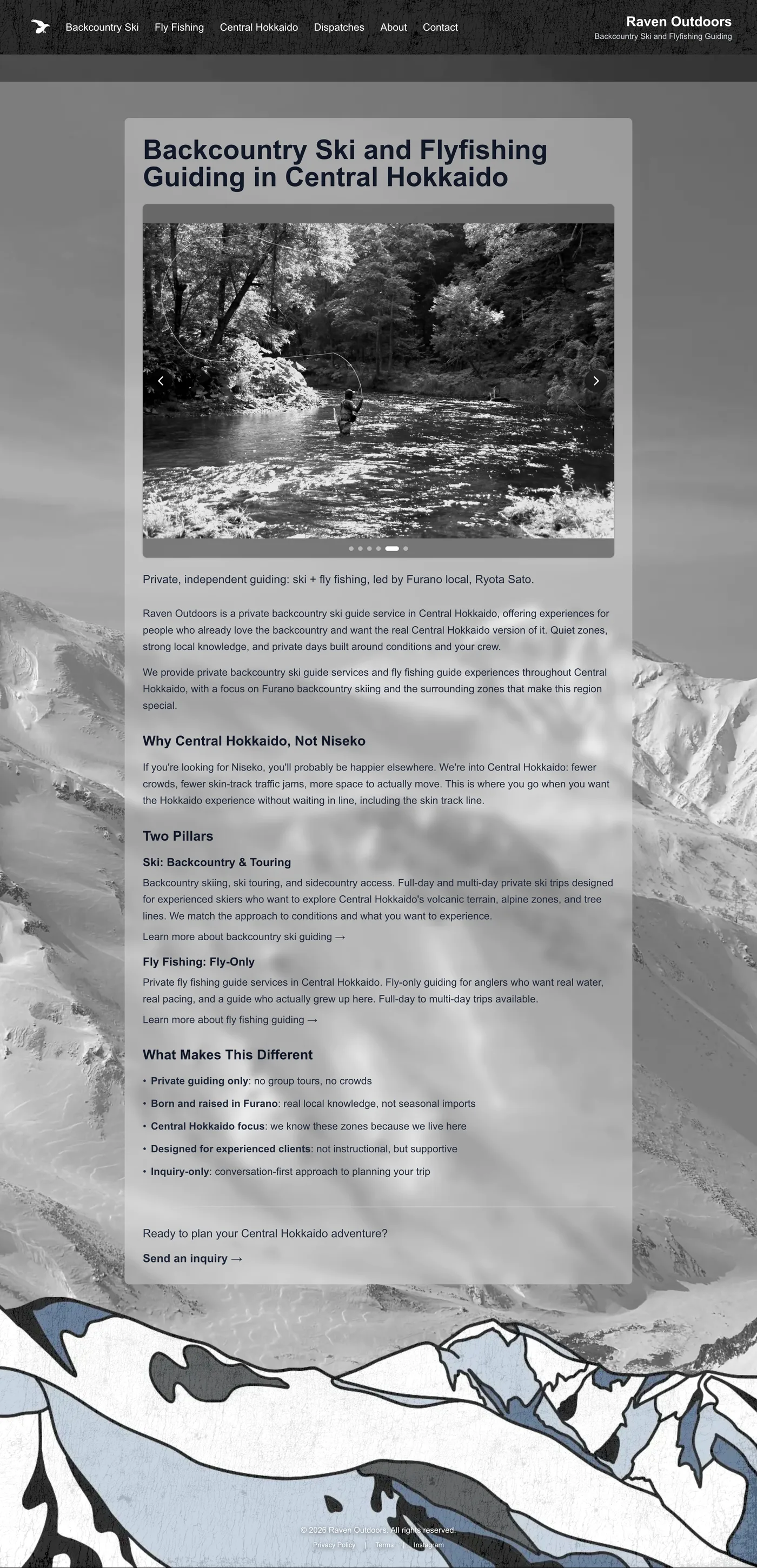
A direct inquiry is rarely created by one heroic red button. It happens when the website answers enough questions, builds enough trust, and makes the next step feel easier than opening another twelve tabs. We see this in our own lodge, and in the strong flow of leads arriving through the website we built for Raven Outdoors.
Understand where uncertainty enters the journey
Start with the questions people ask immediately before contacting you. If guests repeatedly ask whether transport is available, whether beginners are welcome, or what a plan includes, the inquiry form is compensating for missing information.
Answering those questions does not reduce valuable inquiries. It removes repetitive ones and helps serious guests contact you with greater confidence.
Match the call to action to the decision
Not every visitor is ready to book. Someone comparing ski lessons may need to check ability levels; a family choosing a lodge may need to understand transport and room arrangements.
Place relevant next steps near the information that supports them: check dates beside accommodation details, ask about conditions beside an activity plan, and show access information before requesting a deposit.
Reduce friction in the inquiry form
Ask only for information the team genuinely needs to respond. Long forms feel especially demanding on mobile and can make a friendly business seem bureaucratic.
Explain when the business normally replies, what will happen next, and whether an inquiry holds availability. Confirmation messages should reassure the guest that their message arrived.
- Use clear field labels that remain visible while typing
- Choose input types suited to phones
- Avoid requiring information guests may not know yet
- Provide another contact route when appropriate
- Track successful submissions, not only page visits
Make direct contact feel trustworthy
Large booking platforms are familiar. A small business must show that direct contact is equally reliable. Use a domain email address, current business details, clear policies, secure forms, and a recognisable team.
If direct booking offers flexibility or better communication, explain that honestly. Do not promise the lowest price unless the business can consistently honour it. We would rather build a believable reason to contact you than paste in a conversion trick the visitor has seen everywhere else.
Measure the path, not just traffic
More visits do not automatically mean more customers. Track visits to important service pages, booking-link clicks, form starts, successful inquiries, phone taps, and the sources that lead to them.
Combine analytics with conversations. Ask new customers how they found you and what made them feel ready to contact you. The words they use often point directly to the next website improvement.